
CLICK HERE to register for the “WSELC Fall 2026 Live Webinar”
Title: Boys Town Research Blitz: Highlights of Translational Research with Children who are Deaf or Hard of Hearing
Presentation 1: Sound beginnings: Optimizing hearing aids for infants and children
Presentation: Boys Town National Research Hospital is an internationally recognized leader in pediatric hearing research, with ten scientists who focus on pediatric hearing research. In this presentation, we will highlight the areas of pediatric hearing research at Boys Town. Part of the presentation will also focus on Boys Town Research for optimizing hearing aid fitting for children. When spoken language is the goal for families of infants and children with hearing loss, well-fitted and consistently worn hearing aids are an essential component of providing high quality auditory input to support language acquisition. Our research suggests that even with improvements in the age of identification of hearing loss, opportunities remain to improve hearing aid fitting outcomes in terms of timeliness and quality for children with hearing loss. In this presentation, we will examine three opportunities for improving the timeliness of hearing aid fitting for children using audibility-based hearing aid candidacy criteria and supporting consistent auditory experience through hearing aid verification and outcomes validation processes. Red flags that signal potential for delay will be highlighted.
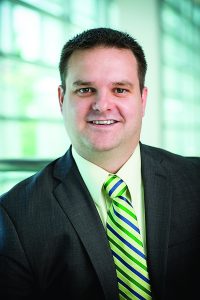
Presenter: Ryan McCreery, Ph.D., is the Vice President of Research at Boys Town National Research Hospital and Senior Scientist in the Center for Hearing Research. Ryan’s NIH sponsored research seeks to improve outcomes for children with hearing loss who use hearing aids using a combination of behavioral and neuroimaging research techniques.
Presentation 2: Assessing speech recognition in noise in children: A new tool
Presentation: This presentation describes the motivation, development, and validation of the Children’s English and Spanish Speech Recognition Test (ChEgSS). ChEgSS is a computer-based tool for assessing closed-set word recognition in English and in Spanish, in quiet or with a masker that is either speech-shaped noise or competing speech. The tester does not need to speak the test language or score productions in that language. Clinical data, collected at multiple pediatric audiology clinics across the United States, will be presented and compared with normative data collected on Spanish-English bilingual and English monolingual children
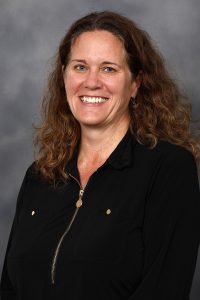
Presenter: Lori Leibold, Ph.D., is the Senior Director of the Center for Hearing Research and the Director of the Human Auditory Development Laboratory at Boys Town National Research Hospital in Omaha, Nebraska. Her background is in audiology and developmental psychoacoustics. Her program of research investigates auditory development broadly, with a specific focus on how children learn to hear and understand speech in the presence of competing background sounds.
Presentation 3: Advancing Precision Audiology in Children with Otitis Media Using Wideband Tympanometry
Presentation: This talk will explore recent advances in the use of wideband tympanometry (WBT) to improve the assessment of audiological and otologic outcomes in children with otitis media with effusion (OME). WBT provides an objective approach to characterizing middle-ear fluid and associated hearing loss in children with OME, demonstrating high sensitivity and specificity. This session will review the fundamentals of WBT and provide practical guidelines for interpreting WBT findings and their variations in children with OME. Participants will gain the knowledge and confidence needed to apply WBT findings to clinical decision-making and support a more precise and objective assessment of middle-ear status and hearing outcomes.
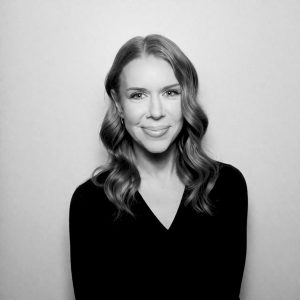
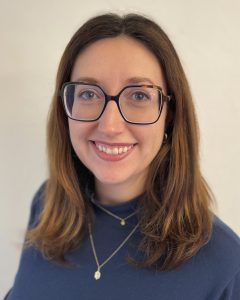
Presenter: Gabrielle R. Merchant, AuD., PhD., CCC-A is an audiologist and hearing scientist and the Director of the Translational Auditory Physiology and Perception Laboratory at Boys Town National Research Hospital. She earned her BA from Smith College, her PhD from the Harvard-MIT Speech and Hearing Bioscience and Technology Program, and her AuD from the University of Massachusetts Amherst. Her translational hearing research focuses on auditory mechanics, auditory perception, and advancing evidence-based practice through improved clinical diagnostic tools.
Presentation 4: Is One Ear Really Enough?
Presentation: Children with unilateral hearing loss demonstrate significant challenges in speech perception that are likely to have cascading effects on broader development. This talk will consider the speech perception challenges of children with unilateral hearing loss in the context of neural plasticity and language abilities resulting from atypical auditory input in one ear
Presenter: Nicole Corbin, Ph.D., is a Scientist at Boys Town National Research Hospital (BTNRH) where she studies how children integrate sound from both ears to develop skills that are foundational for listening, language, and learning. Her primary focus is on understanding how children who are deaf/hard-of-hearing in one ear learn to navigate complex listening environments and optimize auditory input to support their academic, communication, and social-emotional development.
Presentation 5: Expanded candidacy for pediatric cochlear implantation
Presentation: Since its inception, cochlear implant candidacy has expanded to include a wider variety of children, including those with more residual hearing. In this talk, we will examine how research is shaping expanded cochlear implant candidacy in children with bilateral hearing loss. We will also discuss remaining questions and areas for future exploration.
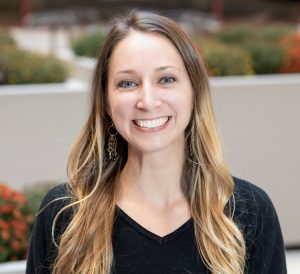
Presenter: Kathryn Wiseman, AuD, PhD, CCC-A is Director of the Child Auditory Technology Lab at Boys Town National Research Hospital in Omaha, Nebraska. Kathryn studies outcomes in children who are deaf and hard of hearing who use hearing aids and/or cochlear implants. Her work aims to provide evidence to enhance device candidacy, fitting, and intervention for these children and their families.
Continuing Education hours are available for live participation in this webinar: both ASHA CEUs and OSPI CECH hours are available if requested in your registration. Participants must complete a post-webinar self-reflection and assessment of the presentations in order to receive continuing education credit. Full credit only; no partial credit.
ASL interpretation is provided.
A recorded version of the webinar will be available within a few days after the live event.
?Questions or accommodations: contact wselc@uw.edu
Ryan McCreery receives funding from the National Institute on Deafness and Other Communication Disorders (NIDCD) and Boys Town National Research Hospital.
Gabriel Merchant receives funding from Boys Town National Research Hospital and is a consultant/speaker for the Interacoustics Academy.
Lori Leibold receives funding from the National Institutes of Health that supports her research.
Nicole Corbin’s current research is supported by funding from NIDCD, Sonova, and Boys Town National Research Hospital.
Kathryn Wiseman receives funding from NIH-NIDCD, Sonova, and the ASHA Foundation.